Buy italmundo.com ?
We are moving the project
italmundo.com .
Are you interested in purchasing the domain
italmundo.com ?
domain@kv-gmbh.de · 0541-91531010
Buy italmundo.com ?
How can one convert acceleration to Earth acceleration?
To convert acceleration to Earth acceleration, one can use the formula: Earth acceleration = acceleration / 9.81 m/s^2. This formula is derived from the fact that Earth's gravitational acceleration is approximately 9.81 m/s^2. By dividing the given acceleration value by 9.81 m/s^2, one can determine how many times greater or smaller the acceleration is compared to Earth's gravitational acceleration. This conversion is useful for comparing accelerations in different contexts to the standard acceleration due to gravity on Earth. **
How can one convert acceleration to Earth's acceleration?
To convert acceleration to Earth's acceleration, one can simply divide the given acceleration by the acceleration due to gravity on Earth, which is approximately 9.81 m/s^2. This will give the acceleration in terms of how many times Earth's gravity it is. For example, if a car is accelerating at 5 m/s^2, dividing this by 9.81 m/s^2 will give approximately 0.51 g, where g represents Earth's acceleration due to gravity. **


Similar search terms for Acceleration
Top-Angebote
Products related to Acceleration:
-
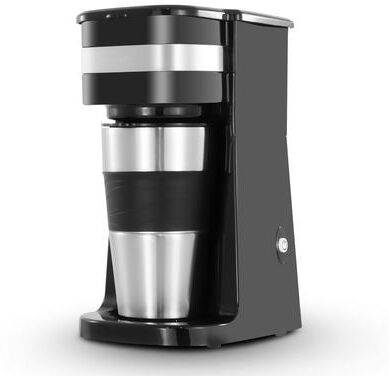
Elite Cuisine EHC149 Single Serve Personal Coffee Maker with Stainless Steel Travel MugSingle serving coffee maker Includes 14-ounce insulated stainless steel interior and exterior travel mug Fits 5.9 inches height One-touch operation switch with power indicator Use ground coffee Equipped with a thermal reset switch to prevent...32,38 $*Shipping: 0,00 $Secure redirect to the provider
-
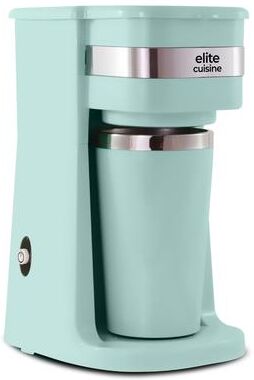
Elite Cuisine EHCL0062 Personal Single-Serve Coffee Maker With 12oz. Ss Travel MugThe Elite Cuisine Personal Single-Serve Coffee Maker is designed with a slim, modern profile that saves counter space and fits easily into tight areas. It’s an ideal choice for small kitchens at home or work, dorm rooms, and RVs.31,99 $*Shipping: 0,00 $Secure redirect to the provider
-
Kyle Books The Low Carb Italian Kitchen: Modern Mediterranean Recipes for Weight Loss and Better HealthPizza, pasta, tiramisu - surely these can't feature in a healthy low-carb diet!? However, the Mediterranean diet is widely acclaimed for its health benefits, and in the hands of Italian food and low-carb specialists Katie and Giancarlo Caldesi, everyone's favourite cuisine can become part of a healthy eating lifestyle.With ninety-three years of cooking experience and several bestsellers between them, Katie and Giancarlo have become leading advocates for the health benefits of a low-carb diet. Here, they show you how, in more than 80 fabulous Italian recipes, you can still eat some of the tastiest food on the planet while shedding weight and achieving a healthier, happier and more energized you.Using the Caldesi's bespoke CarbScale, The Low Carb Italian Kitchen ensures that anyone can enjoy delicious low-carb Italian food. From sugar-free dolci and low-carb pizza to portion-controlled pasta with abundant vegetables and delicious antipasti.12,99 £*Shipping: 2,99 £Secure redirect to the provider


-
What is the difference between gravitational acceleration and Earth's acceleration?
Gravitational acceleration is the acceleration experienced by an object due to the force of gravity, which is approximately 9.81 m/s^2 on the surface of the Earth. Earth's acceleration, on the other hand, refers to the acceleration of the Earth itself as it orbits the Sun, which is approximately 9.81 m/s^2 towards the Sun. In essence, gravitational acceleration is the acceleration experienced by objects on Earth due to gravity, while Earth's acceleration is the acceleration of the Earth as it moves through space. **
-
What is the difference between tangential acceleration and rotational acceleration?
Tangential acceleration is the acceleration of an object moving in a circular path, and it is directed along the tangent to the path. It is caused by a change in the object's speed or direction. On the other hand, rotational acceleration is the rate of change of angular velocity of an object rotating around an axis. It is caused by a torque or force acting on the object, and it is directed perpendicular to the plane of rotation. In summary, tangential acceleration is related to linear motion in a circular path, while rotational acceleration is related to the change in the rate of rotation of an object. **
-
What is the formula for acceleration in uniform acceleration in physics?
The formula for acceleration in uniform acceleration in physics is given by a = (v - u) / t, where a is the acceleration, v is the final velocity, u is the initial velocity, and t is the time taken. This formula represents the change in velocity over time, and it is used to calculate the rate at which an object's velocity is changing. Acceleration is measured in meters per second squared (m/s^2). **
-
Is acceleration always constant?
No, acceleration is not always constant. Acceleration is the rate of change of velocity, so if an object's velocity is changing at a constant rate, then its acceleration is constant. However, if an object's velocity is changing at a non-constant rate, then its acceleration will also be non-constant. For example, when an object is thrown upwards, its acceleration due to gravity is constant, but when a car is speeding up or slowing down, its acceleration is not constant. **


Why is there acceleration?
Acceleration occurs when there is a change in an object's velocity, either in magnitude or direction. This change can be caused by a force acting on the object, such as gravity, friction, or a push or pull from another object. According to Newton's second law of motion, the acceleration of an object is directly proportional to the net force acting on it and inversely proportional to its mass. Therefore, if there is a net force acting on an object, it will experience acceleration in the direction of the force. **
What is negative acceleration?
Negative acceleration, also known as deceleration or retardation, occurs when an object's velocity decreases over time. This means that the object is slowing down. Negative acceleration can be caused by forces such as friction, air resistance, or opposing forces acting on the object. It is represented by a negative value in equations of motion and is the opposite of positive acceleration, which causes an object to speed up. **
Top-Angebote
Products related to Acceleration:
-
Elite Cuisine EHC149 Single Serve Personal Coffee Maker with Stainless Steel Travel MugSingle serving coffee maker Includes 14-ounce insulated stainless steel interior and exterior travel mug Fits 5.9 inches height One-touch operation switch with power indicator Use ground coffee Equipped with a thermal reset switch to prevent...32,38 $*Shipping: 0,00 $Secure redirect to the provider
-
How can one convert acceleration to Earth acceleration?
To convert acceleration to Earth acceleration, one can use the formula: Earth acceleration = acceleration / 9.81 m/s^2. This formula is derived from the fact that Earth's gravitational acceleration is approximately 9.81 m/s^2. By dividing the given acceleration value by 9.81 m/s^2, one can determine how many times greater or smaller the acceleration is compared to Earth's gravitational acceleration. This conversion is useful for comparing accelerations in different contexts to the standard acceleration due to gravity on Earth. **
-
How can one convert acceleration to Earth's acceleration?
To convert acceleration to Earth's acceleration, one can simply divide the given acceleration by the acceleration due to gravity on Earth, which is approximately 9.81 m/s^2. This will give the acceleration in terms of how many times Earth's gravity it is. For example, if a car is accelerating at 5 m/s^2, dividing this by 9.81 m/s^2 will give approximately 0.51 g, where g represents Earth's acceleration due to gravity. **
-
What is the difference between gravitational acceleration and Earth's acceleration?
Gravitational acceleration is the acceleration experienced by an object due to the force of gravity, which is approximately 9.81 m/s^2 on the surface of the Earth. Earth's acceleration, on the other hand, refers to the acceleration of the Earth itself as it orbits the Sun, which is approximately 9.81 m/s^2 towards the Sun. In essence, gravitational acceleration is the acceleration experienced by objects on Earth due to gravity, while Earth's acceleration is the acceleration of the Earth as it moves through space. **
-
What is the difference between tangential acceleration and rotational acceleration?
Tangential acceleration is the acceleration of an object moving in a circular path, and it is directed along the tangent to the path. It is caused by a change in the object's speed or direction. On the other hand, rotational acceleration is the rate of change of angular velocity of an object rotating around an axis. It is caused by a torque or force acting on the object, and it is directed perpendicular to the plane of rotation. In summary, tangential acceleration is related to linear motion in a circular path, while rotational acceleration is related to the change in the rate of rotation of an object. **
Similar search terms for Acceleration
-
Elite Cuisine EHCL0062 Personal Single-Serve Coffee Maker With 12oz. Ss Travel MugThe Elite Cuisine Personal Single-Serve Coffee Maker is designed with a slim, modern profile that saves counter space and fits easily into tight areas. It’s an ideal choice for small kitchens at home or work, dorm rooms, and RVs.31,99 $*Shipping: 0,00 $Secure redirect to the provider
-
Kyle Books The Low Carb Italian Kitchen: Modern Mediterranean Recipes for Weight Loss and Better HealthPizza, pasta, tiramisu - surely these can't feature in a healthy low-carb diet!? However, the Mediterranean diet is widely acclaimed for its health benefits, and in the hands of Italian food and low-carb specialists Katie and Giancarlo Caldesi, everyone's favourite cuisine can become part of a healthy eating lifestyle.With ninety-three years of cooking experience and several bestsellers between them, Katie and Giancarlo have become leading advocates for the health benefits of a low-carb diet. Here, they show you how, in more than 80 fabulous Italian recipes, you can still eat some of the tastiest food on the planet while shedding weight and achieving a healthier, happier and more energized you.Using the Caldesi's bespoke CarbScale, The Low Carb Italian Kitchen ensures that anyone can enjoy delicious low-carb Italian food. From sugar-free dolci and low-carb pizza to portion-controlled pasta with abundant vegetables and delicious antipasti.12,99 £*Shipping: 2,99 £Secure redirect to the provider
-
What is the formula for acceleration in uniform acceleration in physics?
The formula for acceleration in uniform acceleration in physics is given by a = (v - u) / t, where a is the acceleration, v is the final velocity, u is the initial velocity, and t is the time taken. This formula represents the change in velocity over time, and it is used to calculate the rate at which an object's velocity is changing. Acceleration is measured in meters per second squared (m/s^2). **
-
Is acceleration always constant?
No, acceleration is not always constant. Acceleration is the rate of change of velocity, so if an object's velocity is changing at a constant rate, then its acceleration is constant. However, if an object's velocity is changing at a non-constant rate, then its acceleration will also be non-constant. For example, when an object is thrown upwards, its acceleration due to gravity is constant, but when a car is speeding up or slowing down, its acceleration is not constant. **
-
Why is there acceleration?
Acceleration occurs when there is a change in an object's velocity, either in magnitude or direction. This change can be caused by a force acting on the object, such as gravity, friction, or a push or pull from another object. According to Newton's second law of motion, the acceleration of an object is directly proportional to the net force acting on it and inversely proportional to its mass. Therefore, if there is a net force acting on an object, it will experience acceleration in the direction of the force. **
-
What is negative acceleration?
Negative acceleration, also known as deceleration or retardation, occurs when an object's velocity decreases over time. This means that the object is slowing down. Negative acceleration can be caused by forces such as friction, air resistance, or opposing forces acting on the object. It is represented by a negative value in equations of motion and is the opposite of positive acceleration, which causes an object to speed up. **
* All prices are inclusive of VAT and, if applicable, plus shipping costs. The offer information is based on the details provided by the respective shop and is updated through automated processes. Real-time updates do not occur, so deviations can occur in individual cases. ** Note: Parts of this content were created by AI.